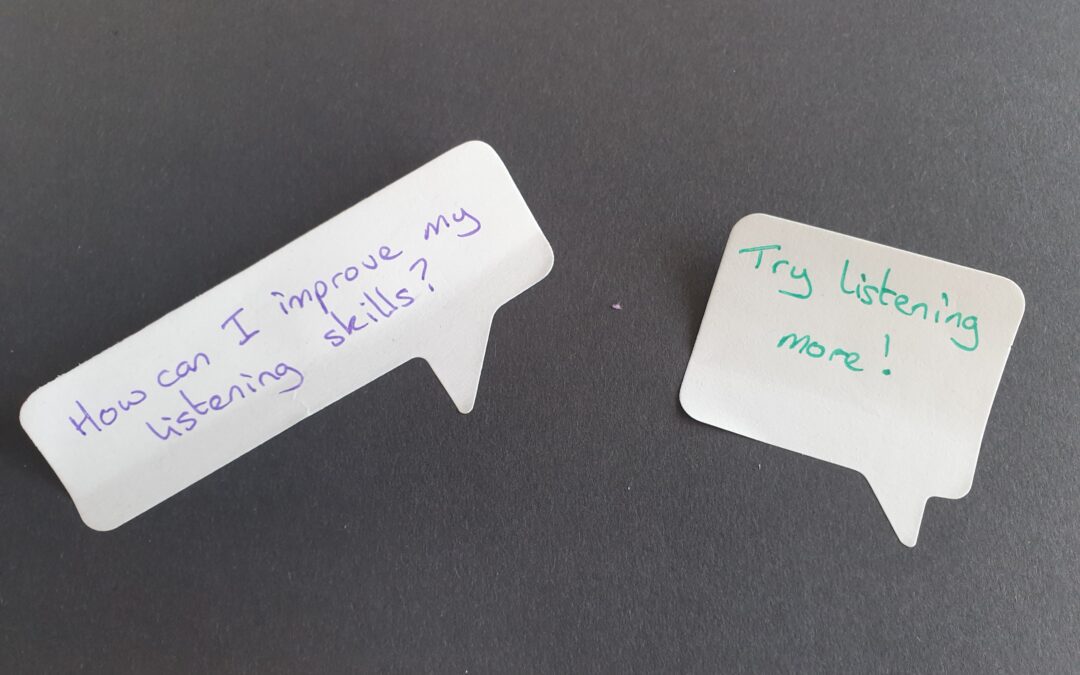
“How can I improve my French listening skills?” asked one of my students recently. “Try listening to more French” was my immediate reply.
Of course I didn’t just leave it there. We talked about suitable resources, including past listening exams, revision workbooks and BBC Bitesize. I introduced them to a popular French news website aimed at children, and to several resources on YouTube. We even spent some time talking about how you can change the language of some shows on streaming platforms or use subtitles (top tip – if you must use subtitles, then use the ones in the target language. If you use English subtitles you will simply ignore the spoken language and just read).
The reality is that if we expect students to do well at listening to French, German or any other language, then we must give them plenty of opportunities to practise doing so. So often with exam students, we focus only on the type of texts that they will find in the exam, rather than exposing them to a wider range of language from the start.
Listening exams for A Level Students – you will be called on to listen to texts and answer questions, but also to listen to texts and then produce a written summary of the key points. You don’t have to limit your practice to just the topics in the syllabus, or just people with a very clear accent, or even just to texts read at the standard pace. You need lots of types of language, lots of different accents, and lots of practice.
Listen to the news in your target language every week. Make notes on the key stories, then check to see if you got it right.
Listen to talk radio in your target language. Music radio often plays English songs. Lovely, but not constructively helpful.
If you can, watch TV in your target language. Whichever streaming platform you use, try to resist the use of subtitles, and if you really must, then use only subtitles in the target language. TV shows are shorter and more manageable than films. If you find one that you really enjoy then you will also be more motivated to watch different episodes and to keep coming back to it.
Don’t be afraid to pause the track and go back. In the A Level listening exam, you have the control over how you use the track. You can listen to it all the way though or pause and go back regularly. My personal choice is to listen all the way through once, to get the whole picture, then to listen in chunks to give me time to make the notes I need.
Above all, for A Level students in particular, don’t wait for your teacher to present perfect listening opportunities (and if they do show the news at lunchtime, make sure you attend!). There is a lot of material to cover, and not much lesson-time in which to complete everything. You will have heard teachers say that you should spend 5-6 hours a week in independent study. This is what they mean. Make regular listening practice an active part of your study plan.
Many of us who completed our education some time ago will have memories of the humble flashcard. A piece of card, usually white, upon which we would write vocabulary to be remembered, significant dates or scientific formulae. Things have moved on now, we are all in a digital world…aren’t we?
While there are several apps which you can use to make digital flashcards, there are many reasons why I still recommend my students use physical flashcards. Here are just a few:
A quick, condensed way to review the material that you need to learn.
Small and easy to carry in a pocket
Can be “jazzed” up with coloured pens and highlighters to make it easier to remember key information
The very act of writing flashcards and deciding what the key points are, is, in itself, an act of revision
Modern research suggests that physically writing the notes, rather than typing them, helps you to remember the information more easily.
Not only should we consider why a physical flashcard is a good revision tool, but we should also think about HOW we use them. Do we sit down for an hour or more, pouring over the words and hoping they stick? Or do we visit them often, for shorter periods of time?
This latter idea is called “Spaced repetition” and is a great way to improve your memory for vocabulary (and dates, formulae, key themes etc). The idea is that our brains can only focus for a certain amount of time. In addition, regular repetition of facts, vocabulary and concepts is a good way to move it from short-term to long-term memory. After all, we didn’t learn to talk in one long study session, and I certainly didn’t learn to tie my shoe-laces in one practice.
For spaced repetition to work well, for example with vocabulary learning, we need to commit to taking positive action about the items we do not remember so well in the first session or two. It may look like this:
Day 1 – Sit down with your flashcards, go through them one at a time, look to see the answer when needed. Go through them again, and make two piles – the terms you remembered and the ones you did not remember yet. Go through the “Not yet” pile one more time. If any are still remaining in the “Not yet” pile, then use them to make a sentence.
Day 2 – Sit down with the flashcards and try them the other way around (e.g. look at the English and try to remember the German). Be very honest about your “Yes, I got it!” and “Not yet” piles. Repeat the “Not yet” pile. Make sentences with them. Hopefully the pile is getting smaller.
Day 3 – Just use the “Not yet” pile to see if you can remember them.
Day 4 – rest
Day 5 – Practice with all, being brutally honest. If there are any left in the “Not yet” pile, then see what else you could do to help. Could you write them out 5 times? Write three different sentences for each one?
The photo you can see with this blog is of two flashcards made by one of my French students, to help remind them of how to form different tenses in French. Note the use of different colours and the different way each is laid out. This is done deliberately to help the student to have a separate “mind’s image” for each tense, helping them to differentiate between them.
PS – Flashcards are now available in a range of colours, so you can have a different set per topic, or subject! You can also get them in small sizes, linked with a metal ring.
The translation passages often seem quite daunting to students. Especially at A-Level, I tend to find that students have been told to “translate every bit” but not necessarily been given concrete ideas about the process to follow to gain maximum marks. These tips should help.
Do take a bit of time to mark-up the source text before you even start to translate. You can write on the exam paper, as long as you don’t write in the margin.
What to look for:
With the A-Level translation into the target language, double-check whether key vocabulary was included in a previous question on the paper. As an example, if the translation is marked as question number 9.9 on the exam, there is a high likelihood that the source text for questions 9.1-9.8 will contain relevant material.
Tenses – there will be a variety of tenses used both at GCSE and A-Level. At A-Level expect the tense to change regularly, even within the same sentence. Consider whether you would use the same tense in the translated language, or a different one.
Verb endings. If the text is in your target language, then use the verb endings to help you work out who is doing what. If you are translating from English then double-check that you have used the correct endings. Remember that some concepts may be singular in English and plural in the target language, or vice versa. Examples include “le pantalon” (trousers), “la majorité” (the majority) and “les devoirs” (homework) for French.
Adjectives – if you are translating into the target language, don’t forget to think about the ending needed on the adjective – Gender of the noun? Plural? Which case? (for German)
Relative clauses – these make the sentence more interesting to read, and a little trickier to translate. E.g. The protesters who attended the recent demonstrations are expected to appear on Sunday as well.
Which phrases need to be translated differently in the second language to the first? One example of this is in the phrase “I have been living in London for three years”. This is a past continuous tense in English, but both German and French would use the present tense (with “seit” and “depuis” respectively). A second example would be the idea that we put the phrase “ago” after a time phrase in English, but before it in both French and German.
Have you covered all the little words which add key details? Words like rather, but, also, however, although, quite, almost etc do also need to be translated. They should not be left out.
If you find it difficult to work out which translated parts go where in the new sentence, it may be helpful to colour-code different chunks of the text. For example, you could use two different colours, alternating, to show which ideas need to go together. This can be particularly useful when working out the adjective endings needed, or whether the verb should be single or plural.
Proof-read your work! If you have any time left at the end of the exam at all, then please make time to proof-read your translation. Check the verb endings, adjective agreements etc, but also check that it makes sense in the final version. If we wouldn’t need “the” or “a” in the English, then don’t use it! In other words, make sure you follow the grammar rules of the language that you are writing in, not the rules of the language you are translating from.
The New Year has arrived and many of us will be making resolutions to get fit, be healthy or be more organised in our study. If you are learning a new language or trying to become more proficient in one you already speak, then these five great habits will help you make consistent progress throughout the year.
1. A Vocabulary Book.
Way back when I was at school (not quite as long ago as Queen Victoria!), we had vocabulary notebooks. These were brought out for every lesson and we carefully noted down the new words so we could learn them for our weekly vocab test. Schools and learning methods have moved on but I still recommend one of these as you can take it with you from year to year, it gathers all the useful words together by topic and the teacher won’t deprive you of it while they mark your homework.
How to set one up? It’s fairly simple – buy a notebook (an A5 one is fine, A6 may be easier to fit into a pocket). Fold the page down the middle, lengthways, so that you have two columns. Write the title at the top and then the target language in the left column and your home language in the right column. Bingo. If you are tackling a short topic such as numbers, then one or two pages will do. If you think the topic may end up as a long one, for example food, then leave a spare page or two so you can add extra words later.
Important – when writing down your new words make sure you include the gender and the plural if it is a noun, details if it is irregular, the past participle if it is a verb and any other useful information. As one example, German has three different genders for nouns, and you definitely don’t want to have to go back and re-learn them all in time for your exams! You could try highlighting them in a different colour for each gender.
2. A Grammar Folder.
There will be lots of grammar concepts to learn in the new language. If you have already been learning the language for a while, then you may have come across multiple tenses and other grammar rules. It can be a real pain having to flick through old exercise books or piles of papers from several years ago in order to find something, so having all that information in one place can be a real blessing.
How to set one up? Buy an A4 folder, in whatever colour you like, and a couple of sets of dividers. Each time you learn a new grammar concept e.g. the future tense, adjective endings, word order etc, write it up onto a sheet of paper with a clear title. Use highlighter pens, underlining, diagrams or whatever seems appropriate. Then file it in your folder under an appropriate subject heading e.g. “Tenses”.
3. Sticky Notes.
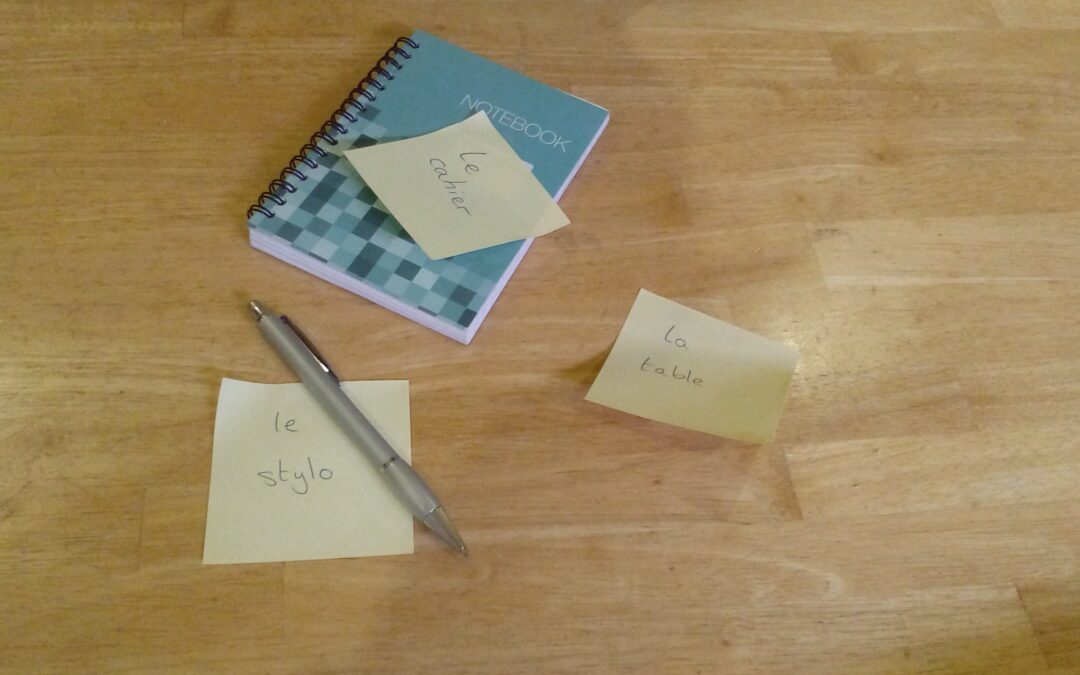
Whether you use them for your shopping list or to leave messages for the family, sticky notes are a common sight in many homes. Whether you get plain yellow ones, coloured ones, funny shapes or the ones which look like speech bubbles, they can be fantastic for vocabulary learning. The obvious idea is to label the items you are trying to learn e.g. “window”, “cupboard”, “fridge” but you could also just write any other word that you need to learn and then stick them up around the home as a regular reminder. Move them around regularly so you don’t get too used to them – or write your target language on one note and your home language on another, then try to match them up. Invest. Invest in sticky notes, now!
4. Regular Practice Time.
Trying to learn a new grammar idea or a list of words is much better done in several short bursts each week rather than one mammoth session. Vocabulary is more likely to stay in your memory if you have practised more than once. You could try focused learning for 10 minutes, three times per week. Or do as some of our students do and put your list near the kettle (or next to your bathroom mirror) so you see it regularly.
5. Vocab Tests.
Whether or not you have regular vocabulary tests during your lessons, it is a simple thing to write a list of the words you are learning (just your home language) and then slip it into a folder for later. When it comes to revision time you have a handy set of tests you can use to see how well you know the topic. This can be useful for adult learners too!
It will take a bit of time and effort to set up these habits to start with, but they will really help you to improve your knowledge of the language and to retain new vocabulary and grammar concepts in the long term.
This website uses cookies to improve your experience. We'll assume you're ok with this, but you can opt-out if you wish.AcceptRead More
Privacy & Cookies Policy
Privacy Overview
This website uses cookies to improve your experience while you navigate through the website. Out of these, the cookies that are categorized as necessary are stored on your browser as they are essential for the working of basic functionalities of the website. We also use third-party cookies that help us analyze and understand how you use this website. These cookies will be stored in your browser only with your consent. You also have the option to opt-out of these cookies. But opting out of some of these cookies may affect your browsing experience.
Necessary cookies are absolutely essential for the website to function properly. This category only includes cookies that ensures basic functionalities and security features of the website. These cookies do not store any personal information.
Any cookies that may not be particularly necessary for the website to function and is used specifically to collect user personal data via analytics, ads, other embedded contents are termed as non-necessary cookies. It is mandatory to procure user consent prior to running these cookies on your website.