During the writing exam, students are asked to write a range of different types of language. You may, for example, be asked to write an article for a school newspaper, or it may be a letter (formal or informal). Make sure you know how to set out each different type of writing and remember to include a greeting and a closing if it is an e-mail!
When it comes to marking, there are a range of techniques which will help to open up the higher grades. One key point is to answer the correct number of questions! For some questions you will have a choice of which question to answer. Don’t try to answer them all as you will run out of time, and some of your answers will be ignored. Try to pick the question for which you have the most ideas that you can express in your target language, and be sure to cover each bullet point.
In order to score well you should also show a range of grammar knowledge and constructions. GCSE examiners are very keen to give out points. Higher Level candidates should try to include as many of the following list as possible:
– A range of tenses (past, present and future as a minimum, but for a higher mark then present, perfect, imperfect, future, conditional and pluperfect if possible);
– Complex grammatical structures – e.g. um…zu for German, après avoir +past participle and avant de +infinitive for French;
– A range of people doing the verbs (to show you can use correct endings);
– Opinions (3 different ways of showing what you think);
– Modal verbs (can, should, must);
– A set phrase or two using the subjunctive;
– Word order: especially for German but also with French (adjective order);
– Correct endings depending on gender (and “case” for German);
– Time phrases – not just “at 12 o’clock” or “tomorrow” but also “rarely”, “often”, “never”, “always”, etc.;
– A negative or preferably two;
– A question where possible.
Additional things for all candidates to think about:
1. Make sure that your written pieces contain work on each of the bullet points. For example, if there are four bullet points (Edexcel) then make sure that it is clear that you have answered all of them, otherwise you lose marks. Check to see that you have used the relevant tense or tenses for each point. If there are two bullet points (AQA) then be sure to expand on each and use a variety of tenses as well as giving your opinion;
2. NEVER leave an answer blank. An intelligent guess is more likely to gain marks than a blank (which is guaranteed not to score at all!);
3. Read the translation passage twice before you start to translate any of it. Get a good idea of what it all means in English, as that will keep you on the right track in your target language. Then if you have a tricky sentence, you can make sure it matches with the general idea of the passage, rather than mistranslating sections you were confident with in order to make them match with your guess for the tricky part;
4. Watch out for the little words that can change the meaning of a sentence. Words like “not”, “already”, “never” etc. provide key information for answering the question successfully, especially in the case of the translation passage. Try not to miss them out of your translation;
5. Pay careful attention to the use of tenses in the translation section. Past, present or future DOES make a difference and you should be able to recognise which one is needed.
The GCSE and A Level exams are approaching rapidly. It really is time to knuckle down and get a revision schedule sorted out so that you make sure you spend enough time on each subject and have a chance to look at all aspects of the curriculum.
Here are a few helpful tips to help you stay on the right path:
1. Don’t revise for an exam within half a day of taking it. Exam in the morning? Stop revising for it at lunchtime the day before. Exam in the afternoon? Don’t revise for it that day. Revising at the last minute can sap your confidence as you convince yourself that you don’t know anything and will never get a good grade. If you don’t know your stuff that close to the exam, then spending the remaining hours cramming is unlikely to help!
2. Little and often is key. It can be really tempting to leave the final exams until much nearer the date. However, after 4-5 weeks of exams you will be suffering from revision fatigue and you really won’t want to spend hours each day revising for the last one or two. Besides, we can’t focus well for hours on end so that kind of revision is less effective anyway. Schedule in a few revision sessions for those last exams earlier in the month so that you can keep things ticking over nicely.
3. Take a break every 45 minutes or so. There is a good reason why school lessons last 35-45 minutes – we cannot focus intensively for much longer than that. Work hard and focus well for 45-50 minutes, then take a short break. Not three hours of social media, but 5-10 minutes to walk around the house or garden, get a drink or something to eat, and stretch. Then sit down for another session. Try looking into the “Pomodoro Technique” – there are lots of videos to explain the idea.
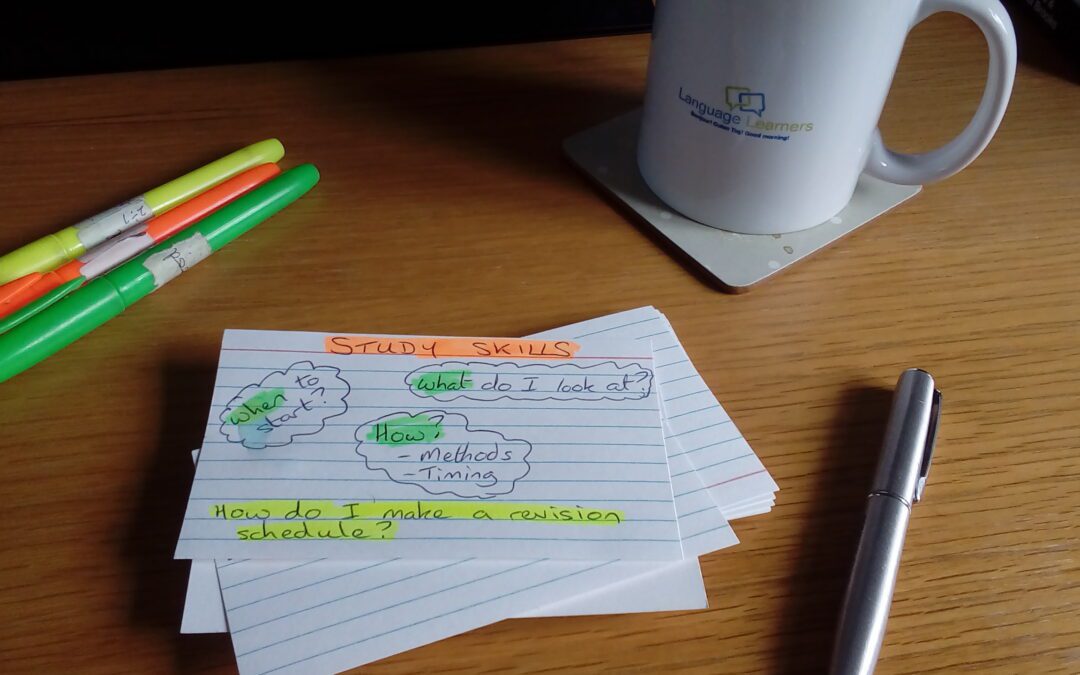
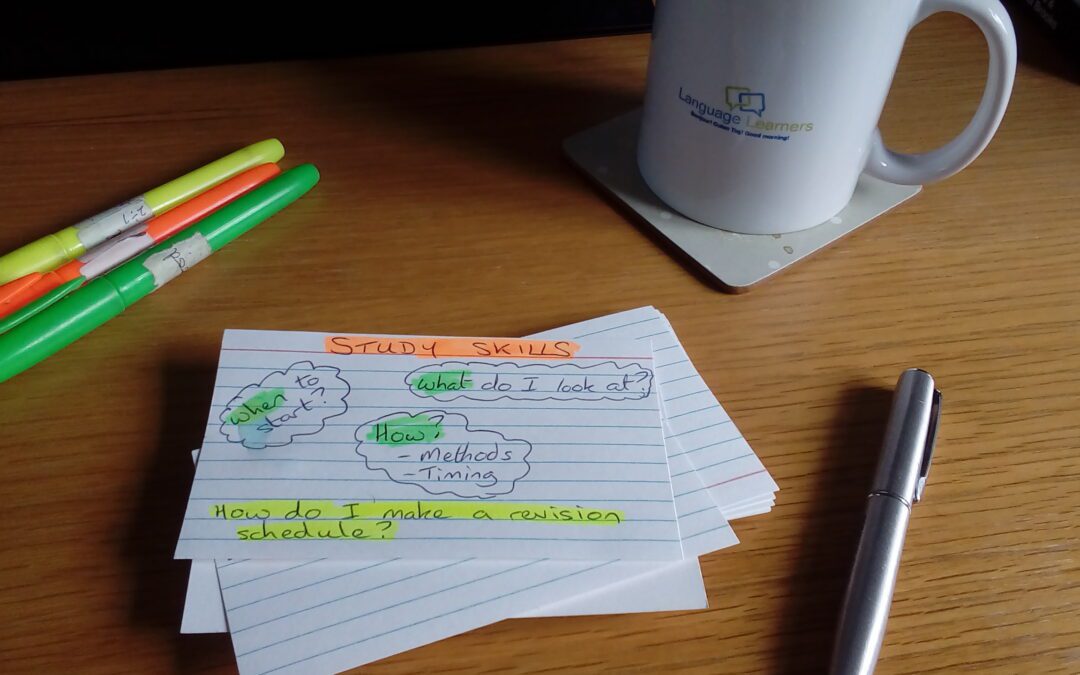
4. Vary your revision techniques. Reading and re-reading the same page again and again only works for a very small minority of people. Try drawing mind-maps, thinking of acronyms to help you remember key info, summarising and re-summarising to get to the key points. Get busy with the highlighter pens, add stickers to mark the important bits, see what works best for you.
5. Test yourself regularly. At the beginning of a topic, write yourself a quiz covering 5-10 key pieces of information. When you think you have finished with that topic, try the quiz and see if you can remember the answers without looking in your notes.
6. Check your timing by trying some past papers, under timed conditions. Time management is an important exam technique as it is vital to leave enough time to tackle all of the questions on the paper. Your teacher may give you some past papers, or you can usually find some on the website for the relevant exam board.
7. Successful multi-tasking is a bit of a myth. If you are watching TV, listening to music, checking social media AND revising, then you aren’t concentrating properly on any of them. Book time in your schedule to check email or messaging apps, tell your friends you are going off-line for a while, and allow yourself to really focus.
8. Downtime is important too, so remember to plan it in your revision schedule. Maybe not full days or a whole weekend, but careful slots to allow you to exercise, meet friends, or go to that party.
9. Eat well. Lots of fruit and veg, of course, but also proper good quality protein and carbs. Yes to home-cooked stir fry, stew, bolognaise etc. Proceed with caution when it comes to doughnuts, chocolate and fast food.
10. Prioritise a good sleep habit. Although it can be tempting to revise late into the night, you have to balance the likelihood of retaining something important read at midnight, with the probability of impaired thinking if you have been up that late!
The GCSE and A Level exams are now approaching at a gallop. It really is time to knuckle down and get a revision schedule sorted out so that you make sure you spend enough time on each subject and have a chance to look at all aspects of the curriculum.
Here are a few helpful tips to help you stay on the right path:
#1 Don’t revise for an exam within half a day of taking it.
Exam in the morning? Stop revising for it at lunchtime the day before. Exam in the afternoon? Don’t revise for it that day.
Revising at the last minute just leads to a lack of confidence as you convince yourself that you don’t know anything and will never get a good grade. If you don’t know your stuff that close to the exam, then spending the remaining hours cramming really won’t help!
#2 Little and often is key.
It can be really tempting to leave the final exams until much nearer the date. However, after 4-5 weeks of exams you will be suffering from revision fatigue and you really won’t want to spend hours each day revising for the last one or two. Besides, we can’t focus well for hours on end so that kind of revision is less effective anyway. Schedule in a few revision sessions for those last exams earlier in the month so that you can keep things ticking over nicely.
#3 Take a break every 30 minutes or so.
There is a good reason why school lessons tend to be less than one hour and include a variety of tasks – we cannot focus intensively for much longer than that. Work hard and focus well for 25-30 minutes, then take a short break. Not three hours of social media, but 5-10 minutes to walk around the house or garden, get a drink or something to eat, and stretch. Then sit down for another session.
#4 Vary your revision techniques.
Reading and re-reading the same page again and again only works for a very small minority of people. Try drawing mind-maps, thinking of acronyms to help you remember key info, summarising and re-
summarising to get to the key points. Get busy with the highlighter pens, add stickers to mark the important bits, see what works best for you.
#5 Why not test yourself?
At the beginning of a topic, write yourself a quiz covering 5-10 key pieces of information. When you think you have finished with that topic, try the quiz and see if you can remember the answers without looking in your notes.
#6 Tackle one or two past papers to check your timings.
Time management is an important exam technique as it is vital to leave enough time to tackle all of the questions on the paper. Your teacher may give you some past papers, or you can usually find some on the website for the relevant exam board.
#7 Successful multi-tasking is a bit of a myth.
If you are watching TV, listening to music, checking social media AND revising, then you aren’t concentrating properly on any of them. Book time in your schedule to check email or messaging apps, tell your friends you are going off-line for a while, and allow yourself to really focus.
#8 Remember to leave some downtime in your revision schedule.
Not days or a whole weekend, but careful slots to allow you to exercise, meet friends, go to that party.
#9 Eat well.
Lots of fruit and veg, of course, but also proper good quality protein and carbs. Yes to home-cooked stir fry, stew, bolognaise etc. Proceed with caution when it comes to doughnuts, chocolate and fast food.
#10 Sleep properly.
Although it can be tempting to revise late into the night you have to balance the likelihood of retaining something important read at midnight, with the probability of impaired thinking if you have been up that late!
This website uses cookies to improve your experience. We'll assume you're ok with this, but you can opt-out if you wish.AcceptRead More
Privacy & Cookies Policy
Privacy Overview
This website uses cookies to improve your experience while you navigate through the website. Out of these, the cookies that are categorized as necessary are stored on your browser as they are essential for the working of basic functionalities of the website. We also use third-party cookies that help us analyze and understand how you use this website. These cookies will be stored in your browser only with your consent. You also have the option to opt-out of these cookies. But opting out of some of these cookies may affect your browsing experience.
Necessary cookies are absolutely essential for the website to function properly. This category only includes cookies that ensures basic functionalities and security features of the website. These cookies do not store any personal information.
Any cookies that may not be particularly necessary for the website to function and is used specifically to collect user personal data via analytics, ads, other embedded contents are termed as non-necessary cookies. It is mandatory to procure user consent prior to running these cookies on your website.