
As an experienced speaker of a second (or third) language it is important to keep your language skills up to date rather than allowing them to benignly stagnate in a smug cloud of “I’ve got this – I have a certificate/A Level/degree”. This isn’t simply a question of keeping your grammar knowledge sharp and remembering a few spelling rules, but more about following the progress of the language as it evolves.
A story which highlights this need comes from the German exchange arranged by my school when I was a teenager. As with all exchanges of the time, a group of students from our school stayed in the host town, living with students and their families. We visited museums and places of interest, had a day in the host school and generally did our best to get by in a language that we had been learning for about two years. While I have vague memories of a lovely host family and a rather strange host teenager (probably more to do with cultural differences than our personalities), the thing that stood out for me most was one of the English teachers from the host school. I can’t even describe his physical appearance particularly well, except that he had a beard and wore jeans when all of our teachers were in suits. What struck me was his use of English. Quite grammatically accurate, but all of his more colloquial language was stuck about 20 years in the past. He sounded quite like my parents when they were being deliberately silly and using “old” phrases from the 1960s and 1970s!
Now that I am probably of a similar age to that man, (give or take a decade or so!), it is something that I am acutely aware of in my own teaching and use of language. Keeping my own language skills relevant to the modern day is an ongoing challenge. What tips can I give for anyone in a similar position who would like to maintain their language skills?
- Use modern technology, streaming services and the like to watch films/TV in the source language. Choose your material wisely – if you use your language for work or need more formal language then watch appropriate material and don’t restrict yourself to daytime gossip TV or the kind of show where “his girlfriend ran away with the hairdresser’s neighbour’s cat”. For colloquialisms, a little bit of reality TV goes a long way, but bear in mind that slang is generational, so try not to “get down with the kids” too much!
- Read the news from the country, in the source language. Do so regularly. It can be really useful to note how a story is reported differently in different countries. It helps boost cultural awareness as well as giving a broader depth of perspectives on a topic. You could also choose a variety of news sources, so you read the same story in both a broadsheet and a more popular format.
- Visit the country when you can. During that visit do not withdraw into your personal bubble of headphones and an English film on your tablet, but use public transport and be fully aware of what is around you. That may be as simple as noticing that shop adverts and announcements now use the informal “you” rather than the formal one that you were taught is correct in such situations. Or it may be that you casually overhear a rapid conversation between friends and then spend 10 minutes afterwards trying to work out what they were talking about.
- Speak with native speakers whenever possible. Especially while you are in the relevant country, or with speakers who still live there. Those who have lived abroad for an extended period may also find that their language skills become dated.
- Above all, have fun with your language! Real-life use is much more likely to stick than pure book work.
Teri is an experienced language tutor with a particular interest in both French and German. Her most recent short holiday included many opportunities to practise her skills, including protracted negotiations at the railway station around using the ticket app and its failings, making purchases at the Christmas market and translating a 10-minute demonstration about medieval instruments of torture!
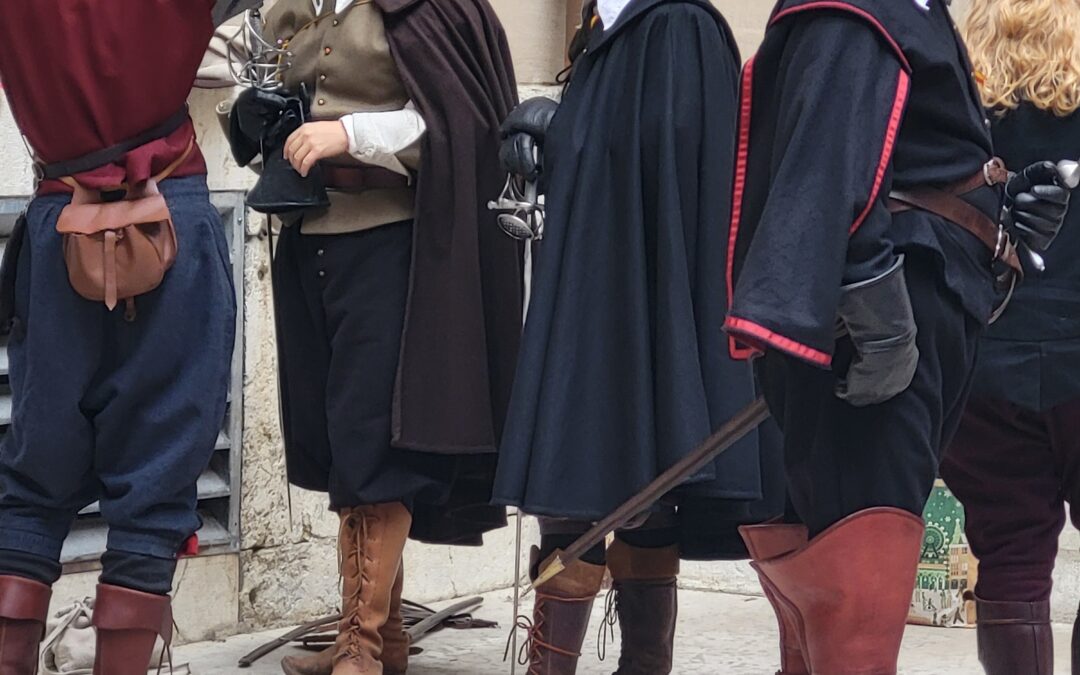
If you are wondering, the photo is of a historical reenactment group in Geneva, preparing for a demonstration of épée techniques in use in 1602 at the time of the “Escalade” attack on the city by the Duke of Savoie. Don’t let your language get this outdated!